
Introduction
Singapore’s urban landscape has undergone a dramatic transformation over the past several decades. From the mid-20th century, much of Singapore’s population lived in slums, squatter settlements, and kampongs (villages), marked by inadequate sanitation, overcrowding, and unsafe living conditions. Recognizing the urgent need for intervention, the Singapore government embarked on an ambitious programme to improve living environments through public housing and resettlement.
At the heart of these efforts is the Housing & Development Board (HDB), established in 1960 with the mandate to provide affordable and quality housing to Singaporeans. This article examines the historical context, the pivotal role of the HDB, and how government-led resettlement programmes successfully transformed slums and villages into thriving modern housing estates.
Historical Context: Challenges of Early Singapore Housing
Before independence, Singapore’s rapid population growth outpaced urban development, leading to the proliferation of informal settlements:
- Slums and Squatter Areas: Many low-income workers lived in overcrowded and unsanitary conditions without access to basic services.
- Kampongs (Villages): Traditional wooden houses on stilts, often lacking in modern amenities such as electricity and running water.
- Public Health and Safety Concerns: Poor drainage and sanitation contributed to outbreaks of diseases such as malaria and tuberculosis.
These conditions were unsustainable for a growing nation that sought to modernize and raise living standards. There was a strong governmental focus on improving housing as a cornerstone of social development and nation building.
The Establishment of the Housing & Development Board (HDB)
To address the pressing housing shortage and poor living conditions, the government set up the Housing & Development Board in 1960, replacing the earlier Singapore Improvement Trust (SIT).
Mandate and Objectives of HDB
The HDB was tasked with:
- Planning and developing new public housing estates.
- Resettling residents of slums and kampongs into modern apartment flats.
- Ensuring affordability to enable homeownership among the wider population.
- Providing essential amenities and infrastructure within housing estates.
By creating organized, high-density, and well-serviced housing estates, the HDB aimed to improve living standards and promote social cohesion.
Resettlement Programmes: From Kampongs to Flats
One of the biggest challenges was resettling residents from kampongs and squatter settlements. The government’s approach combined careful planning, community engagement, and phased development.
Key Features of the Resettlement Approach
- Voluntary yet Structured Resettlement: Residents were offered flats in new HDB towns as alternatives to their existing living conditions.
- Affordable Pricing: Flats were subsidized, supported by savings schemes such as the Central Provident Fund (CPF) to assist purchase.
- Provision of Facilities: New estates included schools, markets, parks, and transport links to preserve community life in a modern context.
- Phased Implementation: To minimize disruption, resettlement was conducted in phases aligned with completion of new housing units.
Community Impact
The clearance of slums and the move into new flats contributed to:
- Improved sanitation and health outcomes due to better living conditions.
- Enhanced social integration across different ethnic and economic groups.
- Greater access to education and employment opportunities via improved infrastructure.
This model gained international recognition for its effectiveness and was a principal factor in Singapore’s rapid post-independence development.
HDB Housing Estates Today
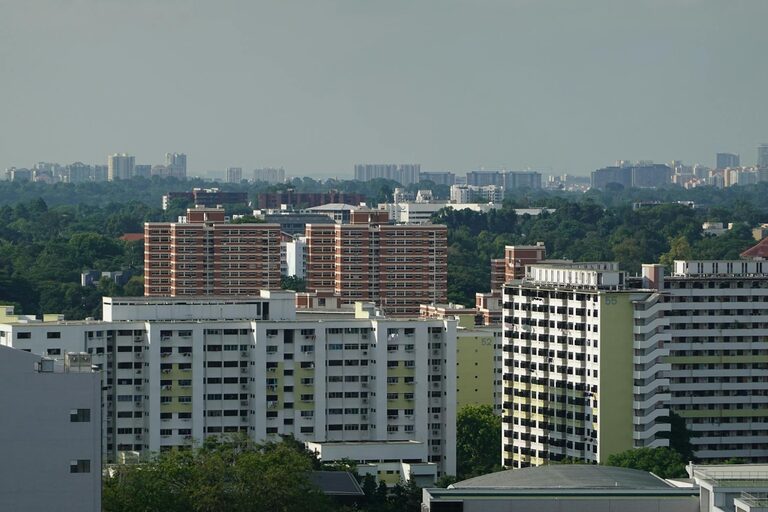
As of 2024, about 80% of Singapore’s resident population live in HDB flats. The estates have evolved from basic low-rise public housing to modern high-density towns with comprehensive amenities.
Features of Modern HDB Towns
- Varied Flat Types: Catering to singles, families, and elderly residents.
- Integrated Amenities: Shops, hawker centres, community clubs, medical facilities, and parks.
- Sustainable Development: Green spaces, energy-efficient buildings, and smart technologies.
- Community Engagement: Support schemes and activities to foster neighbourliness.
HDB’s ongoing renewal and upgrading programmes continue to improve residents’ quality of life while preserving a sense of community.
Role of CPF and Other Supporting Agencies
Affordable homeownership was made possible largely through the Central Provident Fund (CPF), a mandatory savings scheme for Singapore citizens.
- CPF Housing Withdrawals: Members can use their CPF savings to finance the purchase of HDB flats.
- Financial Security: This reduces reliance on bank loans and facilitates long-term affordability.
- Collaboration with Other Agencies: In addition to HDB and CPF, agencies such as the Urban Redevelopment Authority (URA) and the Land Transport Authority (LTA) coordinate on land use and transport planning.
For more information on CPF’s role in housing finance, visit the official CPF website.
Conclusion
The transformation of Singapore’s slums and villages into modern housing estates is a model of strategic urban planning combined with social policy. The Housing & Development Board played a central role with its innovative resettlement programmes, affordable housing solutions, and community-focused estate design. Supported by schemes such as the CPF, these efforts have delivered long-term social and economic benefits by providing Singaporeans with quality homes and inclusive communities.
Singapore’s housing journey underscores the importance of coordinated government action and sustained investment in public infrastructure. For practitioners and planners worldwide, the HDB story provides valuable lessons on addressing urban housing challenges in growing cities.
References
- Housing & Development Board. (2024). About HDB. Retrieved from https://www.hdb.gov.sg
- Central Provident Fund Board. (2024). Housing Schemes. Retrieved from https://www.cpf.gov.sg
- Singapore Government. (2024). Public Housing and Town Development. Retrieved from https://www.gov.sg
Disclaimer: This site is an informational blog and is not affiliated with the Government of Singapore.